Dear Brothers and Sisters,While here in Kenya I am pondering how we might integrate the missions outreach and training of our various networks and congregations. Here is a draft of a proposal which attempts to integrate what I have felt and sensed and have heard you express in various ways at various times. I would appreciate your feedback: suggestions, modifications, questions, whatever.Your brother and fellow servant,E. DanielMission Driven Life Teams (MDLT)To Jerusalem and Regions Beyond
VisionA global army of people consistently focused for a lifetime on knowing Christ and advancing His kingdom at home and abroadMission1. Raise up, train and equip people to become effective in missions in their local setting (Jerusalem)2. Prepare people for a missions experience in a global setting (Regions Beyond)3. Carry out global mission assignment in partnership with the global partners and under their leadership4. Arrange for a local and global coach for each person, to encourage, comfort and urge to live a mission-focused life worthy of God who calls us into his kingdom and glory5. Encourage, equip and support people in continuing their local and global missions focus throughout life regardless of educational and career choices6. Encourage people to continue under local and global coaching influence throughout life7. Prepare people to become coaches to local and to global personsStrategies1. Raising up, training and equipping people to become effective in missions in their local setting (Jerusalem)a. Conduct weekly training, impartation sessions throughout the yearb. Develop a ‘core faith/ministry curriculum’ to use in training/impartation sessionsc. Conduct a quarterly evangelism weekend concluding with a publicly advertised healing/evangelism serviced. Focus the weekly sessions on preparing persons to take an active role in the evangelism/ healing weekende. Assign a local coach to each participantf. Build evangelism outreach experiences into the everyday life of each participant2. Prepare participants for a missions experience in a global setting (Regions Beyond)a. Encourage participants to pray and discern the global setting where God is calling them to serveb. Arrange for a coach from the global setting of calling to begin a relationship with the participantc. Begin to invest in the global setting through prayer and guided learning experiences from the global coachd. Raise finances for the eventual global missions experiencee. Put aside a portion of the raised finances to give to the global missionf. Coordinate eventual global experience with others also called to the same global mission site3. Carry out global mission assignment in partnership with the global partners and under their leadershipa. Global partners plan to incorporate Mission Driven Life Teams (MDLT) into existing programs in their own countryb. MDLT participants submit themselves to the leadership of the global partner.c. Length of global assignment is determined by the mutual needs of the participant and the global partnerd. Country of origin leaders and global partners maintain ongoing communication about the progress of the MDLTe. MDLT participant continues relationship with local and global coachesf. Focus of global missions experience is to equip and train the participant in becoming effective in missions in the global setting4. Arrange for a local and global coach for each person to encourage, comfort and urge to live a mission-focused life worthy of God who calls us into his kingdom and glorya. Each setting chooses the coaches that will be involved with local as well as the global MDLT participantsb. Coaches will be men and women who are full of the Holy Spirit and wisdomc. Coaches will be further trained in the mentoring/coaching process according to a curriculum developed by KLNd. Coaches will be accountable to the MDLT leadership for the progress of their coachinge. Coaches will communicate periodically with their counterpart in the global setting about the MDLT participants of mutual involvementf. Coaches will be prepared to maintain a relationship spanning a number of years with the participantsg. Coaches will be gender specific, that is males with males and females with females.5. Encourage, equip and support people in continuing their local and global missions focus throughout life regardless of educational and career choicesa. Create a culture that views missions as a lifestyle and not simply a career choice.b. Create a culture that embraces missions for a lifetime and not just for a season of life. (There is no retirement option)c. Encourage each participant to seek the boldness to promote the gospel by word and deed in every setting, sacred or seculard. Prepare people to expect harassment, persecution, hardship and even death as they faithfully hold out the word of lifee. Prepare people to expect and seek the Holy Spirit’s direction and empowerment for effective ministry in a given settingf. Expect settings and seasons to change but the mandate for missions to remain till the King returns at the end of the day6. Encourage people to continue under local and global coaching influence throughout lifea. Provide frequent encouragement and support over time so that ‘no one misses the grace of God’ available for a given situation or seasonb. Encourage a lifetime ‘poverty of spirit’ that is always seeking to learn regardless of how effective one has beenc. Encourage openness to local and global coaching in order to sustain commitment to the local and the global body of Christ7. Prepare people to become lifetime coaches to local and to global personsa. Create a culture that honors those who are and have been fathers and mothers in the faithb. Emphasize that all are called to follow Jesus Christ and to nurture and encourage others in following Christc. Continue periodic equipping, encouragement and counsel to the local and global coachesd. Clarify that the persons being coached may or may not change over time, but that passing on the faith is a lifestyle for a lifetimeAdditional Thoughtsa. Inform and inspire young children to prepare to participate in the MDLTb. Invite anyone from teens to 80s to participate in MDLT as a participant or as a coachc. Participating in a global MDLT requires attention to the following:Demonstration of ministry/evangelism faithfulness in local settingEvidence of a godly character and Holy Spirit anointing‘Scars’ from local ministry experiencesFinancial preparednessRecommendation of MDLT leaders and coachesd. Format and content of training in evangelism/ministry will be determined by local leaders but may be informed by experiences and counsel of ministry partners in the global setting.e. Those planning core curriculum should consider the followingtheologyministry training/impartationcharacter formationbiblical relationship conflict resolution approacheslocal culturef. Develop a prayer team to pray regularly for those embracing the MDLT lifetime lifestyle
A Modest Proposal For Your Consideration
16 Dec 2011 Leave a comment
Christ, Not Peace, Is Lord
07 Dec 2011 Leave a comment
in Peace
Dear Brothers and Sisters,
We find it difficult to make clear sounds on the issue of war and peace at a time when the Church is divided on these issues. Yet it is not about what we find difficult; it is about what the Spirit is saying to the churches. After prayer and discernment with other church leaders, we offer you the following word.
1. Christ is our Lord, not a peace position. As highly as we value our historic peace position, Christ, rather than a position or a doctrine, is Lord. We face the same danger as the Israelites. They were saved by looking at the brazen serpent in the wilderness. But then they began to worship the serpent, the means that God used to bless and heal them. They became, as it were, the “brazen serpent” Christians. God has blessed us and the world through our peace witness, yet it seems at times we value our position more than we value Jesus. We talk about it more than we talk about Jesus. We even feel more affinity with non-Christians who are pacifists than we do with other Christians who do not share our position on peace. We find our identity more in our peace position than we do in our faith in Christ.
Christ is calling us to listen first to Him as to how to live out our peace witness, rather than to let our commitment to peace shape how we hear and follow Him. He is calling us to find our identity in Him and not primarily in our peace position.
2. The judgment of God begins with the household of faith and not with the civil government. As we bear witness to governments we must do it with respect because we are called to honor all men. Even Michael the archangel did not bring a slanderous accusation against the devil. We displease our Lord if we devalue and disrespect our president or the leaders of other countries justifying our attitudes by their supposed wrong behavior.
Before we speak to others we need to first ask God to reveal to us the condition of our own hearts. Are we “waging peace” with a spirit of pride, presumption, bitterness and self righteousness? Or do we love and bless all mankind, even the enemies in our own country. We can be wrong in our attitudes even when we are right in our position and doctrines.
3. We are called to pray for all people. It is appropriate to thank God for those political leaders who are placed to bring order and not chaos into the world. We pray for leaders both of our own and of other countries, believing that they all lead under the sovereignty of God.
It is appropriate to pray for the salvation of soldiers and civilians on all sides of a conflict, that they may carry out their responsibilities with humility and justice. We pray for a speedy resolution to war with a minimum amount of bloodshed on all sides.
It is appropriate to pray that God will bring defeat to those forces which would counter His purposes for the advancement of His Kingdom. We pray with humility, knowing that God may wish to judge our own nation as well as others.
4. We are called to lay down our lives for Christ. Our neighbors are willing to lay down their lives for the fatherland. Christ is calling us who do not participate in secular warfare to lay down our lives as well. He is calling us to serve in dangerous battlefields—in violence-ridden inner cities, in prisons, with drug addicts, prostitutes and violent criminals, in third world countries, to AIDS victims, and to terrorists.
When we heed Christ’s call as a church, dying will no longer be a theoretical issue. Some of our best and brightest will die on the streets of our inner cities. Some will be physically violated. Some will be tortured and killed. They will experience these things because they did not value their lives above faithfulness to His calling.
5. We are called once again to be a peace church. Christ wants us to be a peace church because we know and trust Him, the Prince of Peace. We live in peace because we have abandoned ultimate outcomes to Him. We give up trying to make things work out the way we want them to work out. Our peace comes from knowing He reigns in this world and that we need do “only what we have received from the Father.”
So, dear brothers and sisters, this is the word we have sensed from the Holy Spirit. We now submit it to you as a fellow member of the household of faith. As you create an “expectant space” for Him to speak to you, we pray that He will give you the grace to live and die as a peacemaker in this broken world.
Your brothers,
Enos Martin, Stephen Haupert, Lloyd Hoover, Nate Showalter and Carlton Stambaugh, all bishops in Lancaster Mennonite Conference; and Richard Showalter, president of Eastern Mennonite Missions. Although the above message was reviewed with dozens of Christian leaders, it was not processed as the official word of any board or group, and the undersigned take full responsibility for its content.
Burkholder Receives Honorary Doctorate
30 Nov 2011 Leave a comment
David H. Burkholder, a 90 year old,Lancaster Mennonite Conference ordained evangelist, from Ephrata, PA, was awarded an honorary doctorate in evangelism by a Bible College in India, PTL-Institute of Mission Studies. This Bible College is a part of Kingdom Life Network (KLN) a global fellowship of Anabaptist related networks. P.C. Alexander, director of the PTL-India network of churches awarded the degree in a KLN Leadership Retreat on August 27, 2011, at Bowmansville, PA.
Dr. Burkholder, son of the founder of a regionally well known farmers market, The Green Dragon, raised a family of five children while farming and running a successful business. At the age of 62 he responded to the call of God to go into full time ‘personal evangelism’. He had kept a list of the people he had met and done business with over the years. He then began to contact these people and present to them the gospel. Over the next 28 years more than 300 people made decisions to follow Jesus. Many of these were baptized immediately, some just hours before they died in a hospital bed. David performed weddings, and funerals, along with the many baptisms.
Lancaster Mennonite Conference licensed and then in 1987 ordained David Burkholder as an evangelist. David was the first person ordained specifically as an evangelist by Lancaster Conference. David continues his membership in Lancaster Conference. He is also a member of LifeGate, a KLN congregation in Elizabethtown, PA.
At the service granting the honorary degree, Dr. E. Daniel Martin stated, “When persons graduate from college they have knowledge of a field of study. When they gain a masters degree hopefully they have mastered a field and when they earn a doctorate they have made a contribution to a field of human endeavor.”
Dr. Martin went on to state, “David Burkholder well deserves an honorary doctorate. This man with a seventh grade education has not only been a successful businessperson but has made a contribution to the field of evangelism. He has demonstrated that the later years of life can be the time of greatest fruitfulness. David has demonstrated that God is not limited by our lack of education, He is only limited by our lack of faith. And David had great faith in God’s ability to use ‘just a plain Pennsylvania Dutchman.’”
Dr. Burkholder was honored by a number of other faith communities where he had ministered over the years. On October 30 in a service at Carpenter’s Community Church, near Leola, PA, where he had spent the greater number of years in ministry, Bishop Lloyd Hoover gave David a plaque from Lancaster Mennonite Conference honoring his faithful service in personal evangelism. Ministers from Metzler’s Mennonite Church and Carpenter’s Community Church testified in this meeting to the significant impact David had on the life and ministry of these congregations.
Even now at the age of 90 David continues to share his faith with all he meets. He lives with a sense that his time here is short and he is eager to go to be with Jesus. He states that he “knows he will die before Christmas.” Then he adds with a twinkle in his eye, “I am just not sure which Christmas.”
The Stories We Tell
27 Nov 2011 Leave a comment
in Journal
Yesterday I spent time writing up the stories in the article I am sharing with you in this email. But I became exhausted by the end of the day and did not have the energy to finish my analysis of the stories. But maybe that depletion of creativity was the Holy Spirit’s way of saying, ‘ I have a better plan.” I am sensing that the better plan is to share these stories with a select group of people and to invite their responses. And then to reflect on and integrate and share their responses.I think this storytelling format is great and we could use it in some LifeGate settings.This is not an assignment. Do not respond unless you feel led to. Hopefully you will enjoy the stories.E. DanielThe Stories We Tell
The stories we tell, they tell on us. In the midst of telling a series of events we reveal our hearts. We reveal what is important; what is painful; what brings joy; what are the things we value and what are the things that put us in turmoil and conflict; what are the things we grieve and what are the things in which we delight. At some level we want to be understood. But we are not always certain that it is safe to reveal our deepest longings. So we tell stories, sometimes to reveal and sometimes to hide our true feelings.
We listen to one another’s stories. We listen to what is said and what is not said. We listen to what is stirred up within our own emotions by the other person’s story. We trust that as we listen we will understand . And if we understand we will be able to more fully appreciate the other. Then relationships will deepen and distances between brothers and sisters will be shortened. That is the hope. And thus we dare to tell our stories.
It was no doubt because of sentiments like those just expressed that the Lancaster Mennonite Historical Society planned an evening of story telling at 7 pm on September 19, 2011 at the James Street Mennonite Church. Two story tellers were chosen. The instructions were simple: each tell a story followed by the other, till each had told seven stories, each a story of 2 to 4 minutes in length. The story tellers were to avoid sermonizing or commenting on one another’s stories or allowing the other’s story to influence the story they told. They were to tell stories that revealed their humanity.
The two persons chosen were presented as exceptional Mennonite leaders. These leaders were in many ways polar opposites.
Miriam Book, Swiss-German, grew up in Lancaster County in a stable Mennonite farm family. Growing up she was actively involved in the Paradise Mennonite Church where her father was a pastor. As an adult she worked in a number of Mennonite institutions: Eastern Mennonite Missions, Philhaven Hospital. She was lead pastor at Salford Mennonite Church; worked at Mennonite headquarters at Elkhart Indiana and now is an interim pastor of a large Mennonite Church in Nebraska. She married later in life to Jim Lapp, a Mennonite leader whose first wife had died.
Lawrence Chiles, an African American grew up in a troubled family in Bronx, New York. He spent time in prison and later was helped to freedom from drugs through a time at Teen Challenge. He was influenced and shaped by many different church groups within the Christian family: Pentecostal, evangelical and Mennonite. He got a college degree and then a masters degree. He is now pursuing a doctorate. He has founded three different community centers, successfully pastored a number of urban churches and worked at Eastern Mennonite Missions as a consultant to churches in urban settings.. He is married to Neireida, a nurse with Puerto Rican ancestry. They have three adult children and a number of grandchildren. Lawrence is presently bishop of a network of 25 churches called Koinonia Fellowship of Churches. This network is part of Kingdom Life Network, a global fellowship of churches, a number of whom have Mennonite roots.
Following is a summary of the stories as they were given during the evening:
Miriam #1. I have long had a call to pastor. I had had multiple opportunities to preach earlier my life but I was not affirmed as a pastor. Finally in the year 2000 I found myself behind the pulpit as a pastor. I asked myself, “What is my identity as a female pastor?” I met a woman who said to someone about me, “There is my pastor”. I was identified as “ my pastor.” This felt good. A parishioner asked me to pray for her on the phone. This increased my sense of what it means to be a pastor. One day I saw three little girls behind the pulpit playing with a microphone. I realized my journey was catching on. I said to them, “Little girls can preach too.”
Lawrence #1. I grew up in a family of nine brothers and sisters. My father was a hermit and mother was shy. My primary school teacher always made me feel good when she would say to me, “Good morning, little Lawrence.” I began to think, “She likes me.” One day I asked to see her after school. I said, “Could you and I get married, Mrs. Jones?” She thought for a minute and then said, that any one she married would have to do well in math. So I worked hard and improved my math grade. Then I went back and asked again if she would marry me. She agreed that my math had improved. She said that she would marry me under two conditions. One, her husband would have to agree and two I could not tell any of the other boys. I agreed to her terms and one afternoon after school we had a little ceremony, just the two of us, and I married Mrs. Jones.
Miriam #2. Over time I became aware of how aware I was of ‘what will people think’. People usually thought good things about me and my sisters. I remember hearing, “Aren’t those little girls cute” As an adult I was working in marketing at Philhaven Hospital, a psychiatric hospital.. One day as I was leaving the building I saw some old acquaintances. I had the sudden thought , “What if they should think I am a patient?” I quickly made certain that my employee identification badge was quite visible as I greeted and passed them in the hallway. As I reflected on this I was surprised that I was still strongly affected by what people think about me. This was a blind spot revealed to me.
Lawrence #2. The 1960s were a troubling time for a lot of people including people in my school. Ms. Laverne Arnold was a Messianic Jewish teacher of mine. One day she said to me, “I noticed you were not rowdy today. Would you like to learn about Jesus?” I did not know who Jesus was but I appreciated her warmth and friendliness so I agreed to meet with her after school to learn about Jesus. And so this woman introduced me to Jesus. Years later a Mennonite preacher with dandruff on his coat loved me and discipled me. He taught me how to pray.
Miriam #3. This is a story passed down in my family about my father’s mother, Grandma Book. Early one morning Grandma Book saw a rat run through her kitchen. She was so frightened that she jumped up on the table and remained there till her husband came in from the barn. When he came in from the barn she anxiously informed him about the rat. He stated, “Just relax, I am certain you did not see a rat in this house.” To settle the disagreement he brought the dog into the kitchen to smell if there was a rat. Rather quickly the dog flushed out the rat grabbed it in his mouth and shook it vigorously. Suddenly the dog lost its grip on the rat in mid shake and the rat flew through the air and landed on Grandmother Books lap.
Lawrence #3. While our children were still quite small we were working in voluntary service in a Pentecostal church in Rehersburg, PA. Finances were tight and we had to make do with little. At one point someone gave us a large crate of oatmeal of all flavors. We tried to be thankful as we ate oatmeal day and night, trying to do more with less. One day my son said, “Is this oatmeal the best we can do? My Sunday School teacher said that God owns a lot of cows so why don’t we ask for a cow?” So my son prayed, “Please dear God could you give us a cow to eat. Three weeks later a knock came at the door. An Amishman said I have just butchered a cow and I felt God nudging me to bring the meat to you in this house. Could you use this meat?”
My son immediately responded, “See dad, my teacher was right. God does have alot of cows and he had one just for us.”
Miriam #4. As a single woman into my middle adult life, I often felt the pressure to marry. Although I had opportunities none seemed quite right. Then I found myself in love and planning a wedding. My friends encouraged and joined me in planning a ritual to recognize the importance of grieving the loss of singleness as I prepared to embrace my new married life. Friends came bringing food to this event. As a part of the ritual I stepped from the sun room representing singleness to the living room representing marriage. I crossed from the joy of singleness which few understand to the joy of marriage which many understand.
Lawrence #4 One day I was at home with the three children while my wife was at her nursing job. It was a hot summer day. In mid afternoon the children came to me and said, “Dad, let’s pray for a miracle. And let’s allow God to choose the miracle.” So we prayed for a miracle. Shortly after finishing our prayer, a stranger knocked on our door. He said, “ I am sorry to interrupt you, but I have business here in the city and I need someone to watch my horse for a couple of hours. Do you know anyone who would be willing to do that?” My children and I immediately received this as the miracle. We went to a nearby park and invited all the neighborhood kids to join us for rides on the horse. And so a rather boring afternoon was miraculously transformed into an event to remember. One of my daughters said at the end of the day, “Let’s pray for more miracles!”
Miriam #5. I was lead pastor at Salford for a number of years. During this time the church grew. These were good years. Then I was called to pastor a large Mennonite Church in Nebraska. This church had Russian Mennonite background in contrast to the Swiss German background of my prior experiences. In April we moved to Nebraska. We were warmly and graciously received by the people. We were given all kinds of food. As we were being welcomed I heard the soft murmur of doves. A woman gave me an afghan which she had made. She said, “I am not bribing you, I just want to express our joy and gratitude for your coming. As I sat for the first time in this large, well filled church, I thought I could hear my mother say “Miriam, Miriam!” I took this to mean that she was affirming my journey as a pastor. I recalled her having said earlier in life that maybe I would someday take my father’s place as pastor of Paradise Mennonite Church.
Lawrence #5. I went to college in North Dakota. Soon after arriving on campus I was surprised to see the girl who had been engaged to my best friend. When I asked her about Jerry she said that they had broken up. I thought I would be a gentleman and I asked her out for dinner. In the course of our conversation at dinner that night I said, “ Since it did not work out with you and Jerry, why don’t you and I get married/” She was taken aback by this comment and responded, “You are uncouth.” Soon after this she announced her intentions to leave the campus and go to Puerto Rica. I said to her, “You can run but you can’t hide.” Several years later she came to my graduation. As I was stepping down from the platform after receiving my diploma, I saw Nereida standing in the front row. She was holding a sign with the single word “Yes” written in big letters.
Miriam #6. Stained glass windows have always beckoned me. There were no stained glass windows in my home church at Paradise Mennonite. But every summer a group of us would travel to northern Pennsylvania to hold a Summer Bible School. We used a small country church for the summer Bible School program. And I still remember the fascination I felt and the beauty of the stained glass windows of that little country church. Later when I was studying at the London Bible College in England I recall gazing at the beautiful stained glass windows on which it was written, “Woe, to me if I preach not the Gospel.” And now again in this Mennonite Church which I pastor are stained glass windows. One has a scene on which is written, “Glory to God in the highest; and another scene with the words, “Let the children come to me;” and a final scene with the words, “ Peace be onto you.” These stained glass windows have been like markers in my life.
Lawrence #6. I as age 17 and I was in prison. I had grown up with an abusive father. I had a rather severe stuttering problem. I would often ride the subway to avoid school because of my shame at my stuttering problem. I was not expecting to have God show up to me in prison because I thought God only helped people who were saved. And I was not saved. But the Lord did show up and He said to me, “I will be your God and you will not stutter.” God is still in my mouth!”
Miriam #7. My parents are now gone. It is a new season. It is at times painful to go to Book and Lapp family meetings. We look through family scrap books and we remember. It is difficult to sing “God be with you till we meet again.” Tears keep me from singing. Some are gone and some are ill. One of the family has lost spouse but we are joyful the spouse is in a new place.. I remember that life is also about parting.
Lawrence #7. My wife is a nurse and she works in an HIV clinic in Philadelphia. Several years ago we moved in to Philadelphia. We moved into a largely Catholic community. It somehow became community knowledge that I was a bishop. The title means nothing to me but to these Catholics the title carried a certain aura. They are in a Catholic community. One of my neighbors threw a large party at his house. He said to me, “Bishop do you drink?” I said yes I drink or I would die. He said come on over to my party and bring your favorite drink.” I got a bottle of grage juice that looks like wine. They all laughed at my grape juice. But then they said, “ Pray for us that this party will go well.” I prayed, “Dear Jesus, please show up at this party. “ Then as the evening wore on one at at time would come to me and begin to share their inner pain. One saie, “My son was just killed, and I can’t stand the pain of the loss.” And so over time our home has become ‘The Nicodemous House’ where people of all stripes come at night.
Question and Answer Session
Following the stories each story teller could ask a question of the other.
Lawrence to Miriam. How are you experiencing pastoring?
Miriam. I need to be in touch with the inner call. I have found increasing confidence in ministering.
Lawrence. I grew up under a woman pastor who said she was called to help people like me. She was called to raise up and train leaders for the harvest.
Miriam to Lawrence. What was the most difficult sermon for you to preach.
Lawrence. The most difficult sermon for me to preach was the sermon I preached after a fight with my wife. I could hardly wait till the sermon was over to apologize.
Favorite pass time of Story Tellers
Miriam. GardenIng ..
Lawrence. Restoring old clocks.
Tell Me Is It Really True?
19 Nov 2011 Leave a comment
in Journal
E. Daniel’s response to Don Hess, father of Matt who plays defense for the Blazers, the Lancaster Mennonite High School soccer team that won the state championship on Friday night, November 18, 2011
Subject: Tell me it is really true
What a delightful bedtime story: good things happen to good people! Tell me again that it is really true.
In this age of cynicism and fallen heroes when happy valleys are devastated by raging flood waters of bitter shame, tell me that somewhere good is really good. Tell me that the coaches did not abuse the boys, that the parents did not bribe the referees and that the boys did not cheat on their exams.
Tell me that tomorrow we will still hold our heads up high; that there will be no headlines of secret steroid use or of drunken brothel brawls.
And tell me that as the years pass and distant events give way to cloudy recall, one memory will hold its own: the cold night in November 2011 in the sweetest place on earth when good things really did happen to good people.
And tell me that this was only the beginning of good things; that succeeding years had more momentous victories. And finally tell me that each one of this great team makes the final goal and hears the welcome words, ‘Well done, good and faithful servants. Enter into the joys of thy Lord.’
E. Daniel
Sexuality: It’s About the Gospel
16 Jun 2011 Leave a comment
in Sexuality
Recently I was asked to write a blog for a Christian magazine on the topic of sexuality. The article was published in “The World Together” the blog for the Mennonite Weekly Review. (www.mennoweekly.org/blog/ ) I believe God gave me this word for the Church.
It’s About the Gospel
For me the issue of human sexuality is about the Gospel.
Do I believe that there is power in the Gospel to transform my life so that I am not defined or controlled by my desires—be they ordered or disordered desires, be they heterosexual, homosexual or bisexual desires? When Jesus answered the tempter in the wilderness (in Matthew 4:4), he essentially said to him, “I will not allow even my legitimate desire for food to define and control me, rather I will be shaped by the will and word and worship of God.” Do I likewise believe that I will receive supernatural power to follow the voice of the Holy Spirit and not my compelling desires?
Even casual observation teaches us the truth of Christ’s words: “The flesh is weak…therefore watch and pray that you do not enter into temptation (Matthew 26:41.)” In spite of healthy childhood relationships, theological training and supportive friends, the flesh is still weak. We all need the support and encouragement of the community of faith so that we do not “miss the grace of God” available to live a life pleasing to our Lord.
Rather than trying to discern “Who sinned? This man or his parents (John 9:2)?”—that he should be so attracted to pornography, or that she should have an apparently innate sexual attraction to the same sex—we will focus on God’s power to bring a world-changing faith out of a disabling struggle.
Rather than pressuring church or society into redefining marriage for persons in same sex relationships, we will accept the word and will of God that a sexual relationship is to be solely between a man and a woman in a marriage ordained by God. We will accept this as a faith reality regardless of the political, social and religious pressure against such a position. We will believe that God is able to make all grace abound to those who are in such a relationship so that they can maintain it for a lifetime. We will trust that God can likewise provide an abundant life (not a second rate or second class life) to those who never marry, whatever their reasons.
Like the Apostle Paul, I will glory in the Gospel. I will glory in what Jesus is able to do.
A young woman whom I know defined herself as a lesbian. From childhood she was attracted to persons of the same gender. As a young adult she became a lesbian activist, boldly asserting to both church and society the needs and rights of persons with same gender attraction. But in the course of time, she began to experience an internal emptiness in spite of a satisfying relationship with another woman. As a result of her struggle, she decided to “try the God thing.” Her search ended in the office of the pastor of an evangelical/fundamentalist church where she “accepted Jesus as Lord of her life.” At that time, the pastor knew nothing of her same gender attractions; neither was she aware that there was anything that needed to change in her personal relationships. But as she began to follow Jesus in her daily life, she came to a deep dissatisfaction with her lifestyle. She discussed this with her partner, assuring her that there was no animosity between them, but that she needed to end the relationship as part of her faith journey. That journey continued—and today she no longer defines herself as a lesbian, but as a child of God who is growing in her love for Jesus and his word.
I am always amazed when Jesus changes people in such a manner. But He did and He does.
The change comes through personal commitment to the biblically revealed will of the Lord, through prayer and love from the community of faith, and through the supernatural intervention of the Holy Spirit of God.
Some time ago I was speaking with a highly educated and very successful church man whose sexual desires had led him into trouble with the law. As we shared together, God graced our interaction with a strong sense of His presence. This led to a time of sweet fellowship between this liberal theologian and myself. At one point he made a remarkable, insightful and unforgettable statement: “I have come to see that our liberal theology has not adequately dealt with the problem of sin in the human heart. We have said, ‘A little education and a little therapy can deal with this problem.’ But the problem of sin in the human heart is much too big for a little therapy and a little education. The problem is so big that it requires a big Savior.”
And that is what I proclaim: the Gospel of “a big Savior” who is able to give us beauty for ashes, hope in place of despair, and order in the midst of the chaos of our disordered desires and lives. I don’t know how to bring life out of death—but He does. Praise His name!
The question is not so much, “Must the person in the disordered situation believe?”…but rather, “Do we in the church believe in the power of God to transform?” The Gospel is that power (Romans 1:16), and because I believe in that power, I dare to proclaim in every disordered situation in life, that nothing is impossible for God.
I will speak of His greatness, and I will pray for His glory to be manifested. Though I might argue or debate or lament the lack of faith in society or the church, I am first and always called to stir up my own faith in the God of the impossible, and to give testimony to that faith, in season and out of season, to the praise of the glory of His grace in the Gospel of the Lord Jesus Christ.
E. Daniel Martin
(E. Daniel Martin is near the completion of a practical text for church leaders (and their congregations) called Not Ashamed: Homosexuality and the Power of God.)
Why I chose the name ‘The Expanding Shrink’ as my blog title
06 Jun 2011 7 Comments
in About Me
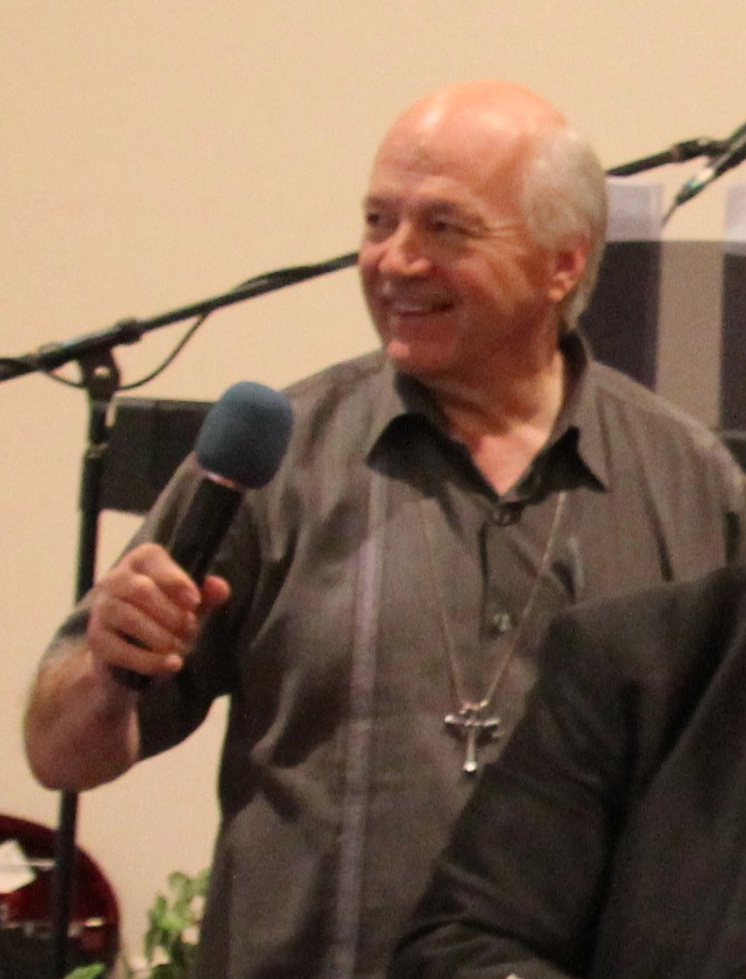
The Expanding Shrink: E. Daniel Martin, M.D.
The Expanding Shrink
I have had a shrinking sense of what I can do in my own strength and wisdom and an expanding sense of what God can do in and through the person who lives and moves in faith. The Apostle Paul said it best, ‘ Without Him I can do nothing.’ But ‘I can do all things through Christ who strengthens me.’
I grew up in a conservative Mennonite farm family near Hagerstown, Maryland. My parents were humble people. They had no inflated sense of what they were to do in the world. They believed life was simple. They were called to obey God by obeying the principles laid out in the word of God; and they were called to be faithful to the church in which God had placed them.
My parents loved me unconditionally; but they sometimes struggled to understand me when I talked of wanting to further my education beyond the tenth grade. I had dropped out of high school at my father’s request after completing the tenth grade. From speakers outside my insular Mennonite community, I heard a ‘new word’. I heard that as Christians we should expand our horizons; we should get an advanced education and like Daniel in the Bible, we should become influential at the highest levels of community and national life.
I decided to become a medical doctor and a psychiatrist. Then in the process I also was called to be a minister. I took a year in the seminary before I started to medical school. I became a licensed pastor of a new church plant in my first year of medical school.
As a psychiatrist I continued as a faculty member at Pennsylvania State University College of Medicine where I had trained. I trained medical students and psychiatric residents in psychiatry. In time I became Psychiatry Residency Training Director and later Vice Chair of the Department of Psychiatry.
In my role as a pastor I saw the church plant become a growing congregation. I was often asked to speak at various places across the country on topics related to faith and mental health. Eventually I was ordained as a bishop and was influential at regional and national levels of the denomination.
Along with the above I was also involved in starting a faith based drug and alcohol treatment program called the Naaman Center and a treatment program for persons with sexual and relationship problems called Day Seven Ministries.
But in spite of recognition and some degree of success in these various areas, I found myself deeply dissatisfied with what I was experiencing. I had come to believe that the ‘gospel is the power of God for salvation for everyone who believes.’ Yet I was not seeing the transformation in people’s lives that I believed God wanted to bring.
I became aware that I was operating from the assumption that if I were to become educated enough or wise enough or experienced enough I could change people. In other words, if I could expand as a psychiatrist and minister, I could more effectively ‘shrink’ peoples’ problems.
I came to see, however, that I needed to shrink my assessment of what I could do and expand my faith in what God can do when we give Him the space to do it.
Approximately 14 years ago I followed God’s call to leave the University, not knowing what I would do next. God arranged for me to take a job working for a company that provided medical and psychiatric care for local jails. My psychiatric training had been that if I could spend one to two hours a week with a patient for several years I could help them to change. Now I was in a setting where sometimes I only had five minutes with a patient.
I prayed, “Oh God, would you please change people in five minutes because I know that I cannot do it” God answered this prayer in an amazing way. I will share more about this in a future blog. But I can say with confidence, “ God can and does make a difference in people’s lives in five minutes.”
I believe that the anointing of the Holy Spirit of God is essential for expanding what we do for God. Without the anointing of the Holy Spirit we are limited to the best we can do in our own efforts and discernment. With the power of the Holy Spirit within us we see that Jesus description of us is true, “ These signs will accompany those who believe: In my name they will drive out demons….they will place their hands on sick persons and they will get well.”
Yes, my faith has been expanded. I am amazed at what God can do . But I can also say that I have only seen a fraction of all that He wants to do in us His children. Paul says in Ephesians that Christ is “able to do immeasurably more than all we ask or imagine, according to his power that is at work in us.”
In some ways I have come full circle to my parents’ rather limited assessment of what man can do. But I have come to a greatly enhanced sense of what God will do in response to the faith of a man who has been ‘shrunk’ and has died to himself but lives in the faith that God is not limited by our limitations. He is only limited by our lack of faith.
And so I sign off from this my first blog as,
The Expanding Shrink
Kenyan Safari Reflections: Traveling Deeper and Further than I Knew I Needed to Go
27 Apr 2011 2 Comments
in Journal, Kenya 2011
 Dear Brothers and Sisters,
There are various levels of reflecting and of reporting about a trip. I wrote up detailed reports on the trip but I did not report on my own personal experiene of the trip. This letter is to share with you my more personal experiences and reflections.
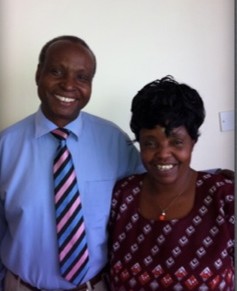
I heard some great testimonies on the trip. I’ll share one from Bishop Joseph. Joseph had two cars: one was not working well and was in the garage for repairs; the other was a small Toyota Corolla. Neither was very satisfactory or reliable for the extensive amount of driving which Joseph does in a year.
On December 28, 2010 a pastor contacted Joseph. This brother had been one of Joseph’s members years ago and now he had become a pastor in his own right. The pastor told Joseph that the Lord had told him to give Joseph a car. He came to Joseph’s house to gave him a very nice Toyota Imsum which was clearly superior to any of Joseph’s other cars. Joseph was greatly blessed by this gift.
The man told the following story of how he came to give Joseph this gift.
This pastor and father of two children was not a wealthy man. However he was able to save money and over a year ago he ordered a used car from another country. He expected it to be shipped into Kenya in January 2010. As he was praying, God spoke to him. God said, ‘I want you to give a gift that costs you something. After you have used the car for a year, I want you to give the car to Bishop Joseph Kamau for all that he had deposited into your life.’ The pastor wrote down this conversation with God in his journal so that he would not forget what God had directed him to do.
As this man shared his story, Joseph felt led to ask him, ‘If you give me this car, will you have another car to drive?’
The man responded, “No I do not have another car.”
Joseph said, ‘Let me think about this situation and let us meet again tomorrow.’
On the following day the pastor delivered the car to Joseph’s house, all newly washed and polished.
Joseph had struggled with what to do. He did not want to insult the pastor by refusing the gift but he did not feel right taking the pastor’s only car. He and Jane decided they would receive the car with gratitude and then give it back to the pastor as a gift from them.
Very reluctantly the pastor received the car back. However several days later he called and stated that he had no peace about the situation. He said God had clearly spoken to him and he had written the message down and he must obey.
Joseph said, “Okay, I will receive the car as mine but I will loan it back to you for a period so you and your family are not without a car.”
The pastor firmly resisted this counter offer. He said, “No, I want you to have the car.”
Finally Joseph said, “All right, brother, I will receive it.”
The pastor responded, “You need not come for it. I will have it delivered to your house.” This involved further expense to the pastor in that the pastor lived several hours from Joseph’s home.
Joseph concluded, “The car has been a blessing ever since. It has been such a blessing.”
This story moved me in several ways. I was impressed with this pastor’s sacrificial obedience. It is one thing to give out of abundance; it is another thing to give out of poverty. This pastor gave out of poverty. Secondly God knows our needs. Joseph had committed his transportation needs to the Lord and the Lord put it in this pastor’s heart to meet the need. The Lord is very efficient. He does several things at one time. He taught the pastor about faithful obedience and he taught Joseph about humbe receiving. And both men praised God for his goodness: the pastor that God had spoken and used him to meet a need and Joseph that God had met his need.
Now, let me share more personally about some things I experienced. I came on this trip with no time to prepare for the five talks I needed to give this week. My prayer was ‘Lord, when I open my mouth, fill it with words so that I may clearly and fearlessly speak the Gospel.’ God did give me words but He did more than this, He spoke first to my own heart.
I spoke on Friday at a conference in Eldoret. I used a passion week passage about Jesus praying in the garden and saying, ‘ The spirit is willing but the flesh is weak; therefore watch and pray that you do not enter into temptation.’ Jesus said that ‘my flesh is weak so why should I try to demonstrate that ‘my flesh’ is strong. It is better to assume that ‘my flesh’ really is weak and that I need to avail myself of all the help from heaven and earth to help me. I need to say, ‘Brother, Would you watch with me?’ and to God I say, ‘Send me help from heaven that I may do your will and not mine.’ I need to take the position that because I am the weakest link I need to spend more time in watching and praying than others.
With about a one-half hour notice I learned that I was to give a second presentation on Friday. I spoke on our need for a baptism of love and used another passion week account of Jesus with his disciples at the last supper. Among other things I discussed the question of why Jesus openly expressed his favoritism toward John. I said that we need to ask, ‘Is Jesus enough for me?’ If Jesus is truly enough for me then I do not need to be preoccupied with how what he does for you compares with what he does for me. On the other hand sometimes what I am delighting in is not really in Jesus , rather it is in perceiving that I am the best and that I am more special or favored than you and that my sense of well being has nothing to do with my joy in Jesus.
After my second talk I thought of leaving the session to get some rest, but I felt the Lord wanted to test me in the very area I had spoken on which had to do with comparisons. In response to my talk, people smiled and nodded and said ‘amen’ and occasionally clapped. But in response to the one who followed me they stood to their feet and shouted and screamed and blew whistles. Praise God, He gave me the grace to enjoy this message and to stand and clap with the rest. I could freely pray that God would increase His blessing on this talented young man. But most important I knew in my heart that, “my Jesus is truly sufficient for me; I do not need to be number one to know I am His and He is mine. What is it to me if He chooses to deal more favorably to my brother or sister.”
But a great part of this trip was something I had not known or expected would happen. It was a deeper level of reconciliation and healing for an old wound I had received years ago.
Years ago I had befriended a young man. I had blessed him and in many ways, in retrospect, I had treated him as a son. However in the course of time a misunderstanding developed between us and we became estranged. I felt betrayed but was not clear what had happened or what I could do to change the situation. I would take it to the Lord and find the grace to forgive and bless this brother. The grace would last about three hours and then the anger and hurt and even depression would return and I would need to pray through the situation again to a place of peace. Gradually over a year the pain was gone and I thought of the situation rarely.
Several years ago this brother called me. He clarified the source of the misunderstanding and at the end of our conversation he asked my forgiveness. We forgave one another and were reconciled. Periodically over the years we would communicate by phone or email. He took more of the initiative. Just recently he contacted me and asked me for a ‘father’s blessing’ for a difficult situation he was facing.
I had learned in the recent communication with this brother that he would be in Kenya with his family at the same time I was here and that we might meet. What I had not expected, was my reaction when I met him and his family on Thursday morning at Bishop Joseph’s house.
The initial greeting was appropriately friendly and warm. This was the first we had met in 8-10 years. We caught up on the basics of how we were doing. Later in the morning it became clear that this brother wanted to talk with me alone. As we talked I became aware that I did need to talk about things at a deeper level. I did want to understand why things had suddenly turned ‘sour.’
As we talked I found myself moved at a very deep level. The memory of the pain of the break in the relationship was suddenly very immediate. I realized that I had distanced myself from this brother as a way of dealing with the pain. I had told myself that he was after all not so important to me; that I could get along just fine in life if I never needed to interact with him again; that it was a hopeless situation- I had done all one could ever be expected to do and that I needed to walk away from the relationship.
I became aware as we shared that even after the ‘reconciliation’ by phone, my responses to the brother had remained muted. I had responded to his initiatives but I had not taken any real initiative to re-establish the level of relationship we once had.
Suddenly it was no longer about the analysis of my feelings, it was a renewal of love for my brother. I wept as we embraced and reaffirmed our commitment to one another. I thanked God for this unexpected deepening of the reconciliation.
On our last day , Pastor Jane told me that this brother wanted to see me again before I left. There was the indication that he wanted his children to say goodbye and to receive a blessing from me. We met at Hotel Kunsta. I had a good time with his 4 year old daughter and his 3 year old son. I put them on my shoulders; I asked ‘who is the greatest little girl in the world?” Then I raised a number of names as possibilites. But after each name I would loudly proclaim that this was not the most special person. Then I would ask, “Is it (the name of the child in question)? And with great gusto answer my own question, “Yes-s-s-s-ss, this is the most special little girl in the whole country.” The children loved this and wanted me to repeat it and repeat it and repeat it . They wanted to change it a bit and say who was the greatest mommy in the world and who was the greatest daddy in the world. This I did till I was exhausted and had to say firmly, ‘That is enough for now.’
I also had a very good conversation with the brother’s wife. She had been affected second hand by the situation and I had always sensed a bit of distance from her. But now all seemed healed; I blessed the children and the couple and prayed over them.
Then the brother said, “there is one more thing.’ Then he told me of a potential business deal that he was contemplating here in Kenya. As an accountant he had figured out the details and it appeared to be an attractive investment opportunity. Then he said he wanted to invite me to go into the business as a partner, knowing that I was always looking for ways to raise money for the church in Kenya.
Suddenly I saw that God had brought things full circle. This person that I had blessed years ago was now in a position to bless me in a very significant way. I can only say, “God is good; his mercies endure forever. He restores the years which the locusts have eaten.
Well I am almost home. I hope you are doing well. God is good! He is always taking us deeper in our relaionships with Him.
Your brother,
E. Daniel
Reflections on the Spiritual Culture of Nakuru Happy Church
27 Apr 2011 Leave a comment
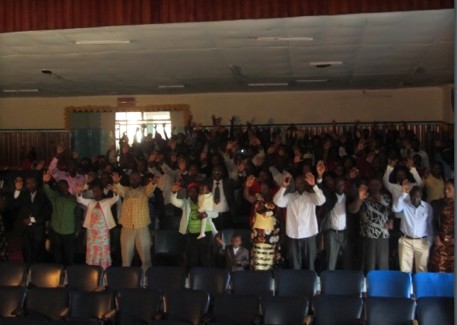 This newsletter is an introduction to Happy Church Ministries International. (Happy Church) based in Nakuru, Kenya. Happy Church is a charter member of Kingdom Life Network (KLN) a newly formed ‘network of networks’ with some 300 churches and ministries in approximately a dozen nations. KLN headquarters are in Lancaster, PA. The ordination of a new bishop is a milestone in the history of Happy Church. This ordination provides the opportunity to formally introduce Happy Church to the larger Christian Community. It also provides the opportunity to reflect on the spiritual culture which Happy Church has created over the 28 years of their pilgrimage.
E. Daniel Martin
1. Happy Church encourages a culture of honor. The people are trained to honor one another and to honor their leaders. At Nakuru Happy Church there is a protocol committee headed by Irene. Irene trains young women how to honor the leaders in the church: to meet the leaders as they enter onto the church grounds; to carry their bags or their Bible; to bring them hot tea or a pleasant drink as they are seated and again after they have just spoken; to provide a place for them to relax and regroup in a private room between services to provide light refreshments after the service and to in all things meet the needs and comfort of the speaker. At the ordination, the ordained was met as he drove onto the ground by a crowd of people who were singing and dancing in anticipation of his arrival. They then accompanied him to the tent of meeting, singing and dancing as they went. All speakers and leaders were given a corsage and “properly seated’ in a place of honor in the service. In one service at the conference preceding the ordination, I sat back in the congregation. A pastor was distressed that I had not been properly seated in a seat in front of the church facing the congregation. The Bible says ‘in honor preferring one another’ and show hospitality without resenting it. Happy Church does this in abundance.
2. Happy Church emphasizes pastoral authority. Although Bishop Kamau is careful to emphasize that he does not want to have a hierarchy where there is an elevation and separation of leaders over those being led, he does feel that the men and women who serve the church should be honored because of their works and words and the anointing that is on them to be servant leaders of the people of God. So these are pastor led churches. However each pastor is under the authority of those over him in the Happy Churches such as overseers and bishops. Bishop Kamau brings himself under the counsel and advice of his fellow bishops and overseers. He is also under the counsel and brotherly address of other leaders in the Kingdom Life Network.
3. Happy Church creates an atmosphere of beauty. In spite of financial challenges, Happy Church maximizes its resources to create beauty. Everyone was in there colorful best at the ordination. The bishop wore a colorful robe. The bishop candidate and his wife were dressed in colorful robes; they knelt on beautiful white lacy cushion to be ordained. Tents and meetings houses are decorated with banners and flowers. There is a lot for the eye. It is as though they are saying, ‘God is so beautiful and we want to remind ourselves in these small ways that He is beautiful’.
4. Happy Church loves to dance. Especially in the worship service there is always movement. Worship and celebration have always been associated with dance in the Happy Church. However now there are presentations were choreographed dances are a special focus. The youth especially delight in these vigorous choreographed dances performed to the exuberent music of praise and celebration.
5. Happy Church expresses joy and celebration. In spite of financial difficulty; in spite of tribal conflict; in spite of governmental corruption; there is joy in the house of the Lord. The worship services celebrate the goodness of the Lord and His intention to bless and keep His people from all evil. Upon leaving the service one is lifted up with joy for another week.
6. Happy Church values covenantal relationships. On several occasions I reviewed with the people the relationship I have had with Bishop Kamau and the Happy Church and our committment to one another over the years. I said that my wife,Ruth, was presently in Belgium visting our son and his wife and our three granddaughters and seeing the tulips of the Netherlands. Of course I would have wanted to be there but I was here in Kenya because of a covenantal relationship. We are commtited to one another. Relationships cost something; they cost time and energy and finances. American churches as well as Indian and Cambodian Churches now have an official covenantal relationship with Happy Church in that we are all members together in Kingdom Life Network (KLN). Happy Church has modeled faithfulness to relationsips in good tiems and difficult times.
7. Happy Church devotes itself to prayer. Prayer is founational of Happy Church ministries. Both private and corporate prayer is strongly encouaged. At leaast once a month Nakuru Happy Chruch has an all night prayer meeting. The meeting begins at 9:30 pm and does not conclued till 6 am or day light. Often as many as 200 people attent this prayer meeting.
8. Happy churh is a community of faith. In the midst of overwheliming odds people believe that God is able to meet their needs and the needs around them. They beleive they are called to pursue God for a break through in their finances, there relationships and their physical healing. Worship services are often enlivened by the testimomies of God’s faithfulness. One woman , the head of the hospitality committee at the Nakuru Happy Church, greately desired to serve the church by providing transportation to people in the chruch as well as visiting speakers. However she had lost her job and had no automobile. In addition she was estranged from her children in spite of her efforts to be reconciled. She began to believe God for a miracle in both these areas. One Sunday morning her son from whom she had been estranged and who knew nothing of her prayer asked the pastor for permission to honor his mother during a Sunday morning service. The pastor agreed. At the agreed upon time he went to the front of the chruch and called his mother forth to honor her in front of the congregation. He stated that God had spoken to his heart and he wanted to honor his mother and to praise God that they had been reconciled. At the end of his comments he handed her the keys to a brand new Toyota automobile. She was overwhelmed by God’s response to her prayers of faith. Since then she continually rejoices that she is able to serve God’s servants by providing them transportation.
9. Happy Church expects and prays for physical healings. Prayer for healing is a frequent occurance. And the frequency of reported healings seems directly related to the frequency of believing prayer for healing. One pastor developed the symptoms of diabetes. He began to lose his eye sight . In spite of medical interventions his symptoms continued and he found it increasingly difficulty to read. Eyeglasses were not satisfactory. He began to feel depression that in spite of having seen God heal many others in response to his prayers, his prayers for his own healing seemed to go unanswered. One day he sensed God telling him to prophecy to his body. So he began to prophecy health to his pancreas and to his eyes and to his entire body. For three weeks nothing happened. Then one day his symptoms remitted. He was able to see again. He continues to have good eye sight without the need for reading glasses. ‘God is so good!’ he proclaims.
10. Happy Church seeks to transform the community and nation with the Gospel lived out in word and deed. The faith disciplines learned in church are lived out in the market place. One brother associated with the Happy Church founded a college and a retreat center with a Christian emphasis. Students from the college do their internships in ‘Hospitality’ at the retreat center. His vision to transform the community through Christian principles applied in the market place has born fruit in a college that now enrolls 500 students and a conference center that is well known and respected in the community. Happy Church members take their calling in Christ as a higher calling than their ethnic loyalties. Thus they are often able to be peacemakers in a culture ridden with conflict and corruption.
11. Happy church takes the Bible seriously. Biblically based preaching, Bible studies and Bible conferences and conventions are a part of the spiritual diet of the average Christian. Biblical principles influence decison making and determine doctrinal beliefs. They also equip the believer to make discernments regarding false doctrines and teachings. Presently there are ‘Christian’ pastors in Kenya teaching that especially anointed brooms purchased from them can be used to sweep the devil out the house and out of their lives. Pastors and believers turn to the Bible to guide them in avoiding such teaching and such practices.
12. Happy Church takes loving relationships seriously. Bishop Kamau had a significant part of his formal theological training in schools of an Anabaptist perspective which emphasized Christian discipleship and and living out the gospel in loving relationships within the body of Christ and within the community at large. Happy Church teaches that love for the brother and the pursuit of peace in all relationships is a central mandate of the Gospel.
13. Happy Church is a Holy Spirit-anointed, Holy Spirit- directed community. Happy Church teaches that one cannot live out the Gospel without the anointing of the Holy Spirit. The baptism of the Holy Spirit is taught as an expected part of the Christian life. Believers are taught to seek the gifts of the spirit. The church moves in and teaches the five-fold ministry with persons functioning as pastors, teachers, evangelists, prophets and apostles within the body of Christ.
Welcome Happy Church Ministries International
27 Apr 2011 Leave a comment
Dear Brothers and Sisters.
This newsletter is an introduction to Happy Church Ministries International. (Happy Church) based in Nakuru, Kenya. Happy Church is a charter member of Kingdom Life Network (KLN) a newly formed ‘network of networks’ with some 300 churches and ministries in approximately a dozen nations. KLN headquarters are in Lancaster, PA. The ordination of a new bishop is a milestone in the history of Happy Church. This ordination provides the opportunity to formally introduce Happy Church to the larger Christian Community.
Newsletter from Happy Church International
Happy Church Ministries International is a network of some 100 churches and some 10,000 baptized believers in Kenya under the leadership of Bishop Joseph W. W. Kamau who founded the church in 1983. As a young man Joseph had medical training as a physician’s assistant. He was also an itinerant evangelist with “Regions Beyond Ministry,” a group of Kenyan young men with a passion to take the gospel to all of ‘Kenya and beyond’. In 1980 Joseph went to Rosedale Bible Institute in Rosedale, Ohio, for Bible training. He followed this with several years study in premedicine at Messiah College near Harrisburg, PA. Upon graduation Joseph expereinced the clear call of God to leave his pursuit of a medical career and to plant a church in Kenya.
In 1983 Joseph returned to Kenya where his faithful wife Jane, an RN, was waiting for him to finish his medical training. She came to share fully in Joseph’s calling to leave medicine and to plant a church. Joseph and Jane discerned that God was calling them to begin their ministry in Nakuru. Joseph rented a tent and held meetings in a square in Nakuru, a city of five hundred thousand, which is a cross roads city of the country. God moved mightily, thousands were saved, many were supernaturally healed of cancers and all manner of diseases. Out of this mighty move of God a new church was born. People commented that the people of this church seemed so happy. Consequently the church became known as the Nakuru Happy Church. This church began to grow and expand.
In 1988 Joseph returned to the States to renew contact with some old friends. Through these contacts he was encouraged to move in faith and to rent a large theatre as a meeting place for his congregation. God blessed this move with dramatic increase in the size of the congregation- from hundreds to thousands in attendance. Through these contacts in the States, Joseph and his elders discerned that God was calling them to associate with the Mennonite Church in Kenya. This was an act of faith in that Happy Church was charismatic in worship style, multicultural and urban and the Mennonite Church at that time, in the early nineties, was more rural and non charismatic in worship style and was not as multitribal. However God moved and both groups were blessed by the union. Joseph was ordained as a bishop in 1991 by the Mennonite bishop Joshua Okello.
After ten years in the Mennonite Church, the Happy Church leadership discerned that they were to separate their fellowship of churches from the Kenyan Mennonite Churches. This separation was not because of conflict. Rather the Happy Church leaders discerned that more could be accomplished for the Kingdom if the two groups associated fraternally in separate organizations rather than attempting to fully merge their differing households of faith. In other words each group manages its own household and blesses the other in pursuing a somewhat differing agenda. God directed and overshadowed this transitioning in the relationships between the Happy Church and the Kenyan Mennonite Church so that each has been enriched by the earlier association and they continue to love and bless one another even though they are in different organizations.
Over the years the Nakuru Happy Church has become a movement of the Holy Spirit in Kenya that has impacted the entire ‘country and countries beyond’ with the Gospel of a Resurrected Lord who transforms lives and communities; a Lord who heals bodies and relationships; a Gospel where miracles are expected on a daily basis and a Gospel where God is creating a community of faith, hope, love, prayer and great joy.
The Nakuru Happy Church has now become ‘Happy Church Ministries International. There are approximately 100 ministers and thousands of members. The Church has a national presence in that congregations are spread all over Kenya and because of TV programing by Bishop Kamau and other leaders in the network of churches. Happy Church has a number of regional overseers who work under the leadership of Bishop Kamau.
In 2009 Bishop Kamau participated in the formation of a global ‘network of networks’ of Christian ministries. This global network is called Kingdom Life Network of Christian Ministries (KLN). The network includes three hundred congregations and thousands of believers in India, Cambodia, and the United State. There are eight networks of churches and ministries in KLN. Each network manages its own household but the networks work together to promote church planting and leadership development. The leaders of the network are in covenant relationship with one another and they share counsel, vision and resources with one another for the advancement of the Kingdom. A number of the networks in the States had their roots in the Mennonite/Anabaptist tradition but have also been impacted by charismatic experiences and theology.
Recently Bishop Kamau and his leaders discerned that God was leading them to proceed in ordaining more bishops to share in the ministry of overseeing and serving the churches.The decision was made to ordain three bishops in the year 2011. Rev. Boniface Runji was ordained on April 23, 2011 in Eldoret, Kenya. On September 10, 2011, Reverend Evanson Macharia will be ordained in the town where he pastors, Thompson Falls. In December 17, 2011, Reverend James Karanja will be ordained in the town where he pastors, Molo, Kenya.
Happy Church Ministires International is poised by faith to in the next ten years change the culture of ‘Kenya and beyond’ through the mighty gospel of Jesus Christ which heals our diseases, transforms our characters and relationships and invades the earth with the culture and will of Heaven.

 theexpandingshrink